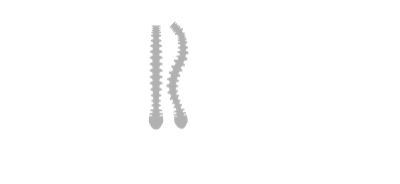
Corrective positions, targeted elongation and de-rotation, and a distinctive breathing technique — built for your curve, not a textbook one.
Your spine doesn't just bend sideways — it rotates. That's why sit-ups and generic stretches don't touch scoliosis. The Schroth Method treats the curve as what it is: a three-dimensional problem that needs a three-dimensional answer.
Developed in Germany a century ago and refined into today's leading scoliosis-specific exercise approach, Schroth uses corrective positions, targeted elongation and de-rotation, and a distinctive breathing technique to work your curve. Dr. Rebeca Correalima trained under the Barcelona Scoliosis Physical Therapy School (BSPTS) — specifically in the Rigo Concept, one of the recognized international Schroth lineages — and it's the foundation of everything we do at Upright.
Every scoliosis has a pattern — which sections curve, which way, and how much rotation comes with it. Schroth starts by classifying yours. Then, session by session, you learn:
The goal is a home program you own. In-clinic sessions teach and progress it; consistency at home is what moves the needle.
Schroth is one of the best-studied scoliosis-specific exercise approaches. Studies our patients often ask about:
Major centers, including Johns Hopkins, offer Schroth to their scoliosis patients.
For kids in a brace (or headed for one), Schroth and bracing are partners, not rivals: the brace holds correction passively, Schroth builds it actively. We help families choose the right brace for the curve type, assess a current brace, and manage weaning into full-time wear. More on our scoliosis physical therapy page.
The Rigo Concept (also called BSPTS-Rigo) is a modern refinement of the classic Schroth Method. It adds a detailed curve-classification system so your exercises are tailored to your exact curve pattern. Dr. Correalima is trained in this approach — so when people search "Schroth," what you get here is its most current, individualized form.
No. Kids in growth get the biggest progression-stopping benefit, but studies show adults improve pain, posture, and even Cobb angle.
You'll feel the corrections from the first sessions; postural change is measured in months of consistent practice. We re-take posture photos to track it.
Schroth bills under standard PT codes. We're out-of-network; most patients submit our superbill for reimbursement. Details on cost & insurance.
Yes — $65 small-group classes, once you've completed a few private sessions and know your corrections. A cost-effective way to stay consistent long-term.
Yes — Dr. Correalima teaches in English, Spanish, and Portuguese.
Send your X-rays ahead if you can, wear something that shows your spine, and bring your brace if you have one. You'll leave your first visit understanding your curve — and with the start of a plan.
Book online in just a few clicks, any time — choose your appointment and you're set.
Schedule appointmentPrefer to talk? Call or text (305) 431-4422 · Mon–Fri, 10am–6pm